Frohlich, C., Practical suggestions for assessing rates of seismic-moment release, Bull. Seismol. Soc. Amer., 97, 1158-1166, 2007, doi:10.1785/0120060193, Show Abstract
This article explores how to interpret observations of rates of seismic- moment release by evaluating simulated earthquake sequences generated assuming Gutenberg–Richter (GR), truncated GR, or exponentially tapered GR distributions. For earthquakes generated assuming a GR distribution, expected moment rates depend strongly on the largest event observed and increase indefinitely over time, never approaching a stable value. For events generated with truncated or tapered distributions expected moment rates increase with time but approach a stable value if moments near the corner moment MC are thoroughly sampled. Thus, interpreting reported moment rates requires knowledge of the corner moment MC and the number N of contributing earthquake observations. This article discusses how to estimate a critical number of events Nlarge where the approach to stability begins; Nlarge depends more strongly MC than on the ß-value, and only weakly on whether one simulates the observations with a truncated or tapered GR distribution. For situations where N is less than Nlarge, the article discusses how to adjust moment rates to account for the expected time dependence and also explores ways for estimating rates that reduce the dependence on the largest event.
Frohlich, C., Deep Earthquakes, Cambridge Univ. Press., 574 pp., 2006
Frohlich, C., A simple analytical method to calculate the thermal parameter and temperature within subducted lithosphere, Phys. Earth Planet. Int., 155, 281-285, 2006, doi:10.1016/j.pepi.2006.01.001, Show Abstract
Temperature profoundly affects seismicity and rheology within subducted lithosphere; the thermal parameter Φ is often used to characterize the temperature structure of subduction zones. Φ is usually defined as tAgeV, where tAge is the age of the plate as subduction begins and V is the lithosphere's vertical descent rate. But, interpretations of Φ can be confusing because its relationship with temperature is seldom expressed explicitly and because published estimates of Φ often vary by factors of two or more. This paper presents a particularly simple approximate model that leads to an analytical relationship between Φ/h and the minimum temperature within subducted lithosphere at a depth h. In spite of the model's simplicity, it gives reasonable approximate temperature estimates, e.g., for subduction zones where Φ is less than about 2500 km, the relationship between Φ and the observed maximum depth hmax of seismicty is consistent with the observation that seismicity ceases when interior slab temperature exceeds about 600–800 °C.
Frohlich, C., and Y. Nakamura, Possible extra-Solar-System cause for certain lunar seismic events, Icarus, 185, 21-28, 2006, doi:10.1016/j.icarus.2006.07.002, Show Abstract
Reanalysis of lunar seismic data collected during the Apollo program indicates that 23 of the 28 rare events known as high-frequency teleseismic (HFT) events or shallow moonquakes occurred during one-half of the sidereal month when the seismic network on the Moon's near side faced approximately towards right ascension of 12 h on the celestial sphere. Statistical analysis demonstrates that there is about a 1% probability that this pattern would occur by chance. An alternate possibility is that high-energy objects from a fixed source outside the Solar System trigger or even cause the HFT events.
Frohlich, C., What makes bowling balls hook?, Amer. J. Physics, 72, 1170-1177, 2004, doi:10.1119/1.1767099, Show Abstract
This article presents exact equations of motion for a rotating bowling ball in a form that explicitly separates contributions due to nonequal principal moments of inertia, center-of-mass offset, and friction between the ball and lane. A computer program that solves the equations demonstrates that all of these factors are important for a realistic analysis of bowling. These factors significantly affect how much balls hook, that is, deflect sideways and approach the pins at an oblique angle. Simulations that approximate real bowling conditions indicate that the largest contribution comes from variable friction along the lane, that is, bowling lanes are generally prepared so that lane friction is higher by a factor of 2 or more along the last one-third of the ball's trajectory. The analysis supports most (but not all) of the guidelines that bowlers have developed for predicting ball performance.
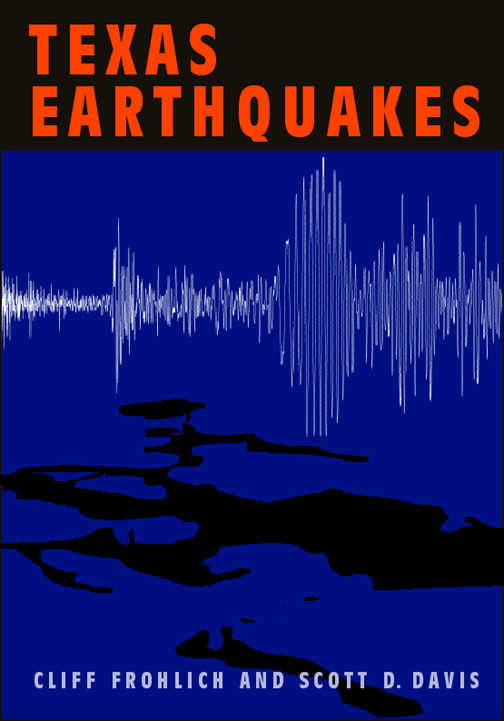
Frohlich, C., and S. D. Davis, Texas Earthquakes, Univ. Texas Press, 275 pp., 2002
Matthews, R. K., and C. Frohlich, Maximum flooding surfaces and sequence boundaries: Comparisons between observations and orbital forcing in the Cretaceous and Jurassic (65-190 Ma), GeoArabia, 7, 503-538, 2002
Pulliam, J., M. K. Sen, C. Frohlich, and S. P. Grand, Crustal structure from waveform inversion of shear-coupled PL, Proc. 24th Ann. Seismic Res. Symp., Ponte Vedra Beach, Florida, 2002
Bilich, A., C. Frohlich, and P. Mann, Global seismicity characteristics of subduction-to-strike-slip transitions, J. Geophys. Res., 106, 19443-19452, 2001, Show Abstract
There are at least 30 major plate boundary segments worldwide where the plate boundary changes from subduction to strike-slip; these include six triple junctions and 24 two-plate boundaries. This study investigates earthquake seismicity in the 24 two-plate subduction-to-strike-slip transition (SSST) regions by utilizing recently published earthquake relocations, ternary diagrams of focal mechanisms, and moment rate calculations. To facilitate cross-regional comparisons, we categorize the geometry of SSST plate boundaries in terms of (1) their radius of curvature, (2) their sense of curvature, that is, whether they are convex or concave as viewed from the downgoing plate, and (3) their tectonic complexity, that is, the variability of crustal thickness and the segmentation of the plate boundary trace. We observe three main trends in SSST regions: (1) there is a conspicuous scarcity of strike-slip earthquakes along plate boundary segments that plate motion models indicate are strike-slip boundaries; (2) in these apparent strike-slip segments, both the rate of occurrence of earthquakes of any kind and the moment release rate are low compared to adjacent subduction segments; and (3) there were few observable differences in seismicity between convex and concave boundaries. The observation that transform zones exhibit moment rate deficiencies, that is, have few large-magnitude earthquakes in the historical record, may have important implications for seismic hazard assessment in SSST regions. In particular, is motion along these boundaries aseismic with little seismic hazard, or is motion expressed in very large magnitude, infrequent, but potentially devastating earthquakes? In at least three such regions, New Zealand, the Philippines, and the Dominican Republic, paleoseismic evidence and the historical record of seismicity suggest that very large, infrequent earthquakes do occur.
Frohlich, C., Display and quantitative assessment of distributions of earthquake focal mechanisms, Geophys. J. Int., 144, 300-308, 2001, doi:10.1046/j.1365-246X.2001.00341.x, Show Abstract
This paper describes quantitative methods for evaluating the distribution of focal mechanism orientations of groups of earthquakes, and shows how to display this distribution on a triangle diagram. We present a χ2-based statistical test for determining whether two sets of focal mechanisms are drawn from distinct populations. We apply these methods to 3625 better-determined mechanisms for shallow earthquakes in the Harvard Centroid Moment Tensor (CMT) catalogue; we describe the distributions of mechanisms in the whole catalogue and for catalogue subsets in some specific tectonic environments. In addition, we explore the geographical locations of mechanisms with orientations that occur relatively infrequently, that is, mechanisms that are unlike thrust, normal, or strike-slip mechanisms. Such mechanisms are relatively rare along mid-ocean ridges and in oceanic subduction zones. The majority of these unusual mechanisms occur along plate boundaries where crustal thickness is highly variable, and in regions where the plate convergence direction becomes oblique and thus relative motion changes from convergence to transform motion.
Frohlich, C., and L. Resler, Analysis of publications and citations from a geophysics research institute, J. Amer. Soc. Information Sci. Tech., 52, 701-713, 2001, doi:10.1002/asi.1121, Show Abstract
We here perform an analysis of all 1128 publications produced by scientists during their employment at the University of Texas Institute for Geophysics, a geophysical research laboratory founded in 1972 that currently employs 23 Ph.D.-level scientists. We thus assess research performance using as bibliometric indicators such statistics as publications per year, citations per paper, and cited half-lives. To characterize the research style of individual scientists and to obtain insight into the origin of certain publication-counting discrepancies, we classified the 1128 publications into four categories that differed significantly with respect to statistics such as lifetime citation rates, fraction of papers never-cited after 10 years, and cited half-life. The categories were: mainstream (prestige journal) publications - 32.6 lifetime cit/pap, 2.4% never cited, and 6.9 year half-life; archival (other refereed) - 12.0 lifetime cit/pap. 21.5% never cited, and 9.5 years half-life; articles published as proceedings of conferences - 5.4 lifetime cit/pap, 26.6% never cited, and 5.4 years half-life; and other publications (news articles, book reviews, etc.) - 4.2 lifetime cit/pap, 57.1% never cited, and 1.9 years half-life. Because determining cited half-lives is highly similar to a well-studied phenomenon in earthquake seismology, which was familiar to us, we thoroughly evaluate five different methods for determining the cited half-life and discuss the robustness and limitations of the various methods. Unfortunately, even when data are numerous the various methods often obtain very different values for the half-life. Our preferred method determines half-life from the ratio of citations appearing in back-to-back 5-year periods. We also evaluate the reliability of the citation count data used for these kinds of analysis and conclude that citation count data are often imprecise. All observations suggest that reported differences in cited half-lives must be quite large to be significant.
Pulliam, J., M. K. Sen, C. Frohlich, and S. P. Grand, Crustal Structure from waveform inversion of shear-coupled PL, in Proceedings of the 23rd Annual Seismic Research Symposium on Monitoring a Comprehensive Test Ban Treaty, Jackson, WY, 2001
Massell, C. G., M. F. Coffin, P. Mann, S. Mosher, C. Frohlich, C. S. Duncan, G. D. Karner, D. Ramsay, and J.-F. Lebrun, Neotectonics of the Macquarie Ridge complex, Australia-Pacific plate boundary, J. Geophys. Res., 105, 13457-13480, 2000, Show Abstract
New marine geophysical data along the Macquarie Ridge Complex, the Australia-Pacific plate boundary south of New Zealand, illuminate regional neotectonics. We identify tectonic spreading fabric and fracture zones and precisely locate the Australia-Pacific plate boundary along the Macquarie Ridge Complex. We interpret a ∼5–10 km wide Macquarie Fault Zone between the two plates along a bathymétrie high that extends nearly the entire length of the Australia-Pacific plate boundary south of New Zealand. We conclude that this is the active Australia-Pacific strike-slip plate boundary. Arcuate fracture zones become asymptotic as they approach the plate boundary. A broad zone of less intense deformation associated with the plate boundary extends ∼50 km on either side of the Macquarie Fault Zone. Marine geophysical data suggest that distinct segments of the plate boundary have experienced convergence and strike-slip deformation, although teleseismic evidence overwhelmingly indicates strike-slip motion along the entire surveyed boundary today. The McDougall and southernmost Puysegur segments show no evidence for past underthrusting, whereas data from the Macquarie and Hjort segments strongly suggest past convergence. The present-day strike-slip plate boundary along the Macquarie Ridge Complex coincides with the relict spreading center responsible for Australia-Pacific crust in the region. Our conceptual model for the transition from seafloor spreading to strike-slip motion along the Macquarie Ridge Complex addresses the decreasing length of spreading center segments and spacing between fracture zones, as well as the arcuate bend of the fracture zones that become asymptotic to the current transform plate boundary.
Nyffenegger, P. A., and C. Frohlich, Aftershock occurrence rate decay properties for intermediate and deep earthquake sequences, Geophys. Res. Lett., 27, 1215-1218, 2000, doi:10.1029/1998GL010371, Show Abstract
We perform a detailed analysis of seven aftershock sequences with intermediate‐ or deep‐focus mainshocks occurring in the Aleutian Islands, Japan, the Pamir‐Hindu Kush (PHK), Tonga, and Bolivia. For each sequence we determine the modified Omori law (MOL) p value and goodness of fit. For all sequences, we are able to find a time interval where the sequence conforms to MOL decay with either c ≡ 0 or c variable. The two sequences with deep‐focus mainshocks have slightly larger p values than the intermediate depth sequences. Despite the rarity of well defined intermediate or deep aftershock sequences, neither the observed p values nor the overall sequence decay behavior significantly differ from that observed for shallow sequences.
Pulliam, J., C. Frohlich, and B. Phillips, Single station event locations: Epicentral distance, bearing, and focal depth, Proc. 22nd Annual Seismic Research Symposium, II, 311-319, 2000
Frohlich, C., and J. Pulliam, Single-station location of seismic events: A review and a plea for more research, Phys. Earth Planet. Int., 113, 277-291, 1999, doi:10.1016/S0031-9201(99)00055-2, Show Abstract
Traveltime-based location methods are ineffective for locating regional seismic events which are recorded by few stations; however, the Comprehensive Test Ban Treaty (CTBT) makes it imperative that we monitor sparsely observed events. This paper reviews the current status of single-station location (SSL) methods—the location of seismic events using records from one three-component broadband digital station. We argue here that SSL methods may ultimately provide the most effective and economical means for monitoring small-magnitude (M3) seismic events over most of the earth. Potentially, station-event distance and focal depth may be determined accurately by utilizing broadband three-component data and matching observed and synthetic waveforms; station-event azimuth is determinable from the polarization of the P-wave arrival and P coda. However, more research is required before SSL methods become a practical alternative to traveltime-based methods. Currently, the most significant problem is that regional seismograms are strongly dependent on regional crustal structure. Thus, future research efforts should focus both on determining appropriate crustal models in specific regions, and also on improved methods for dealing with regional variations in crustal structure. A second important problem concerns location errors; with SSL they may involve 180° errors in station-event azimuth or other highly non-Gaussian `blunders'.
Frohlich, C., and S. D. Davis, How well constrained are well-constrained T, B, and P axes in moment tensor catalogs?, J. Geophys. Res., 104, 4901-4910, 1999, Show Abstract
The T, B and P axes of earthquake moment tensors (MT) are often used to evaluate regional stress directions and other tectonic parameters; we here undertake three comparisons to assess the uncertainty in the orientations of these axes. These are (1) a direct comparison of common MT in the Harvard, U.S. Geological Survey, or Earthquake Research Institute (ERI) catalogs; (2) a comparison of MT slip vectors and plate motion vectors in several tectonically straightforward regions; and (3) an analysis of the axial variability in the Harvard and ERI catalogs implied by the reported uncertainties in individual MT components. All three comparisons indicate that there is considerable variability within the catalog concerning the axial orientation of MT, but all suggest that axis orientations of the majority of Harvard MT have uncertainties of 15° or less. For compensated linear vector dipole (CLVD) components among the three catalogs, the correlation is very low. For the Harvard catalog, three statistics are especially useful for selecting better constrained MT; these are (1) the relative error E rel, which is the ratio of the scalar moments of the reported error tensor and of the MT itself; (2)ƒCLVD, a measure of the strength of the CLVD component; and (3) n free, the number of MT elements not fixed at zero in the inversion. For selecting better constrained MT, the appropriate statistical cutoffs chosen depend on the problem of interest, the data available, arid personal preference. However, for analysis of shallow earthquakes we have used E rel ≤ 0.15, ƒCLVD ≤ 0.20, and n free = 6. While this eliminates 53% of the catalog, our calculations suggest that nearly all the remaining events have T, B, and P axes with azimuth and inclination angle uncertainties of 5°-10° or less.
Frohlich, C., (Book review): The Road to Total Earthquake Safety, by C. Lomnitz and A. A. Balkema, Eos, Trans. Amer. Geophys. Un., 80, 540, 1999
Pulliam, J., C. Frohlich, and R. B. Schlottmann, Accuracy and uncertainty in single-station event location, Proc. 21st Seismic Research Symposium: Technologies for Monitoring the Comprehensive Nuclear-Test-Ban Treaty, Vol. I, Las Vegas, NV, 589-598, 1999
Bilich, A., S. A. Clark, B. Creighton, and C. Frohlich, Felt reports from the Alice, Texas, earthquake of 24 March 1997, Seismol. Res. Lett., 69, 117-122, 1998
Frohlich, C., Does maximum earthquake size depend on focal depth?, Bull. Seismol. Soc. Amer., 88, 329-336, 1998
Frohlich, C., (Book review): Fundamentals of Geophysics, by W. Lowrie, Eos, Trans. Amer. Geophys. Un., 79, 187, 1998, doi:10.1029/98EO00138
Matthews, R. K., and C. Frohlich, Forward modeling of sequence stratigraphy and diagenesis: Applicatiion to rapid, cost-effective carbonate reservoir characterization, GeoArabia, 3, 359-384, 1998
Nyffenegger, P. A., and C. Frohlich, Recommendations for determining p values for aftershock sequences and catalogs, Bull. Seismol. Soc. Amer., 88, 1144-1154, 1998
Pulliam, J., and C. Frohlich, Case studies of event location with a single station, Proc., 20th Annual Seismic Research Symposium, edited by J. Fantroy, D. Heatley, J. Warren, F. Chavez, and C. Meade, 275-285, 1998
Schuur, C. L., M. F. Coffin, C. Frohlich, C. G. Massell, G. D. Karner, D. Ramsay, and D. W. Caress, Sedimentary regimes at the Macquarie Ridge Complex: Interaction of Southern Ocean circulation and plate boundary bathymetry, Paleoceanography, 13, 646-670, 1998, Show Abstract
Seafloor structure at the Macquarie Ridge Complex strongly influences the intensity and circulation pattern of ocean currents south of New Zealand. New marine geophysical data show heterogeneous sedimentary environments on Macquarie seafloor that reflect interaction of highly variable bathymetry with the Antarctic Circumpolar Current and north flowing Antarctic Bottom Water. Acoustic backscatter, bathymetry, and seismic reflection data collected aboard R/V Rig Seismic in 1994 show five bathymetrically constrained sedimentary provinces flanking the ridge complex: (1) northwest Macquarie hemipelagic drifts, (2) current-modified Solander submarine fan complex, (3) southwest Macquarie manganese nodule province, (4) Emerald Basin pelagic drift province, and (5) sediment-free oceanic crust related to the 53.5°S passage in the Macquarie Ridge Complex. The late Miocene-Pliocene opening of a 53.5°S passage in the ridge complex caused a major increase in the intensity of ocean current circulation, sediment reworking, and erosion in all sedimentary provinces.
Frohlich, C., M. F. Coffin, C. G. Massell, P. Mann, C. L. Schuur, S. D. Davis, T. Jones, and G. D. Karner, Constraints on Macquarie Ridge tectonics provided by Harvard focal mechanisms and teleseismic earthquake locations, J. Geophys. Res., 102, 5029-5041, 1997, Show Abstract
In this study we evaluate teleseismically determined focal mechanisms and epicenters for earthquakes along the Macquarie Ridge Complex (MRC) from 45°S to 61°S and 155°E to 168°E, a region characterized by some previous investigators as undergoing subduction initiation. From 65 centroid moment tensors reported by Harvard, we develop statistical guidelines for choosing 26 which represent better determined, more reliable focal mechanisms for tectonic analysis. Although thrust mechanisms occur in the north, near Fiordland, elsewhere along the MRC the better determined mechanisms virtually all indicate that present-day motion along most of the MRC is strike-slip. This is consistent with sidescan sonar and multichannel reflection data collected between 50°S and 57°S on 1994 and 1996 cruises; the active plate boundary zone appears to be quite narrow (< 5 km wide), and no active compressional features can be observed on the seafloor. If we determine a rotation pole for plate boundary motion using only slip vectors from better determined Harvard mechanisms along the MRC, the best fitting “instantaneous” pole is at 57.4°S, 179.4°E, about 2.5° north of the NUVEL-I Australian-Pacific pole, which averages motion over the last 3.0 my. If the MRC pole was formerly farther south than at present, this could explain the existence of relict features associated with crustal shortening, such as bathymetric highs and troughs; yet, the absence of active features such as thrust faults, etc., suggests ongoing compression or subduction initiation. We also carefully read arrival times for P phases for 53 earthquakes at 16 teleseismic stations, selected to represent a range of azimuths surrounding the earthquakes; we relocated these earthquakes using standard joint epicentral determination (JED) methods. While most of the better quality relocations lie on or very close to the Australia-Pacific boundary as determined on the 1994 cruise, a few epicenters occur well away from the boundary, apparently on Cenozoic fracture zones. Thus, on the Macquarie Ridge Complex and other major strike-slip boundaries (e.g., in California), it appears that the very largest earthquakes occur on the principal plate boundary fault but that other earthquakes, some quite large, may occur away from the boundary along zones of preexisting weakness.
Frohlich, C., (Book review): Structure and Fate of Subducting Slabs, by T. Lay, Eos, Trans. Amer. Geophys. Un., 78, 373, 1997, doi:10.1029/97EO00242
Frohlich, C., (Book review): The Earth's Shifting Axis - Clues to Nature's Most Perplexing Mysteries, by M. B. Strain, Geotimes, 42 (12), 37-38, 1997
Matthews, R. K., C. Frohlich, and A. Duffy, Orbital forcing of global change throughout the Phanerozoic: A possible stratigraphic solution to the eccentricity phase problem, Geology, 25, 807-810, 1997, doi:10.1130/0091-7613(1997)025<0807:OFOGCT>2.3.CO;2, Show Abstract
Astronomers have little confidence in orbital forcing calculations on time scales beyond ten million years. They are confident that the fundamental frequencies of the planetary orbits remain nearly constant on time scales of hundreds of millions of years. Small variations in these frequencies and chaotic behavior of certain resonance relationships, however, can introduce large uncertainty regarding the exact orientation of planetary orbits on time scales of tens to hundreds of millions of years. We introduce a simple trigonometric series expression for eccentricity in order to evaluate effects that arise from imposing specified displacements in orientation of planetary orbits. The resulting changes in the character of the calculated eccentricity time series should be a guide to stratigraphers seeking to relate orbital forcing to stratigraphic time series throughout the Phanerozoic. This geologic calibration of eccentricity time series in relatively old stratigraphic sequences may provide astronomers with clues to further refinement of their calculations.
Pulliam, J., C. Frohlich, and S. P. Grand, Factors controlling single-station location, Proc., 19th Annual Seismic Research Symposium, edited by M. J. Shore, R. S. Jih, A. Dainty, and J. Erwin, 272-280, 1997
Frohlich, C., Cliff's nodes concerning plotting nodal lines for P, Sh, and Sv, Seismol. Res. Lett., 67, 16-24, 1996
Frohlich, C., (Book review): Exercises in Active Tectonics: An Introduction to Earthquakes and Tectonic Geomorphology, by N. Pinter, Eos, Trans. Amer. Geophys. Un., 77, 322, 1996
Zhao, L.-S., and C. Frohlich, Teleseismic body waveforms and receiver structures beneath seismic stations, Geophys. J. Int., 124, 525-540, 1996, doi:10.1111/j.1365-246X.1996.tb07035.x, Show Abstract
In this paper we describe a practical method for determining crustal structure by comparing observations of teleseismic body waves with synthetics constructed using generalized ray theory. Layered crustal structure beneath a seismic station strongly influences teleseismic body waves arriving in the 50 S or so after the initial P: however, the effect of crustal structure differs significantly for vertical-component and radial-component records. For any proposed crustal structure, we develop an approximate theoretical formulation to predict the radial-component seismogram as a function of the vertical-component observations. Then, we compare the observed and predicted radial-component seismograms in the time domain, and vary the proposed crustal structure using a grid-search scheme until we obtain an optimum match. The theoretical approximation is complete to second order in the reflection and transmission coefficients, and is accurate to within a few per cent for modelling teleseismic waveforms. We demonstrate the feasibility of this second-order, radial-vertical comparison (SORVEC) method by testing it on synthetically generated waveforms having complicated source properties and significant levels of background noise. We illustrate the application to real data by determining the crustal structure beneath two seismic stations in Tibet, LZH and AMDO. Beneath station LZH, the crustal thickness is about 65 km. Beneath station AMDO, the crustal thickness is about 75 km. and there is a low-velocity layer in the lower crust.
Zhao, L.-S., M. K. Sen, P. L. Stoffa, and C. Frohlich, Application of very fast simulated annealing to the determination of the crustal structure beneath Tibet, Geophys. J. Int., 125, 355-370, 1996, doi:10.1111/j.1365-246X.1996.tb00004.x, Show Abstract
The simulated annealing method has recently been applied to several multiparameter optimization problems, including those of geophysical inversion. A new variant of simulated annealing, called very fast simulated annealing (VFSA), overcomes some of the drawbacks of a conventional simulated annealing; it has been found to be a practical tool for geophysical inversion (Sen & Stoffa 1995). the method is particularly useful for non-linear problems with multiple parameters where a grid-search method is prohibitively expensive. Here, we have applied VFSA to retrieve the crustal structure beneath seismic stations in Tibet using teleseismic body-waveform data. Our approach is to compare the radial-component records with generalized ray synthetics directly in the time domain. For any given crustal structure, we have formulated a direct relationship between the radial- and the vertical-component signal, so that we can generate synthetic radial-component data from recorded vertical-component seismograms (Zhao & Frohlich 1996). We have tested the VFSA inversion algorithm using synthetics and confirmed that it works very well, i.e. it finds solutions very close to the true solution. Using the algorithm, we have determined the crustal structures beneath 11 stations in Tibet. From south to north, the total crustal thickness is quite uniform. Our tectonic interpretation of these crustal models is that they may represent crust from the Eurasian plate injected beneath the crust of the converging Indian plate. Certain features of the models are consistent with the presence of a small convection cell or plume beneath north-central Tibet, as suggested by Molnar (1990).
Zhao, L.-S., and C. Frohlich, Single-station seismic event location: How non-horizontal structure affects apparent azimuth, Proc. 18th Annual Seismic Research Symposium, edited by J. F. Lewkowicz, J. M. McPhetres, and D. T. Reiter, 799-808, 1996
Davis, S. D., P. A. Nyffenegger, and C. Frohlich, The 9 April 1993 earthquake in south-central Texas: Was it induced by fluid withdrawal?, Bull. Seismol. Soc. Amer., 85, 1888-1895, 1995
Frohlich, C., Characteristics of well-determined non-double-couple earthquakes in the Harvard CMT catalog, Phys. Earth Planet. Int., 91, 213-228, 1995, doi:10.1016/0031-9201(95)03031-Q, Show Abstract
This paper evaluates earthquakes in the Harvard centroid moment tensor (CMT) catalog which possess well-determined, deviatoric non-double-couple mechanisms, i.e. mechanisms with significantly large compensated linear vector dipole (CLVD) components. For a CMT M, we measure the strength of the non-double-couple component with the statistic Γnorm = 2.6det[M]/| M |3, which is 0.0 for a pure double couple and ±1.0 for a pure CLVD. For each CMT, we measure whether Γnorm is well determined by allowing individual elements of M to vary within their range of uncertainties as reported in the Harvard catalog, then determining the range of variation of |Γnorm| as M varies. The most well-determined 11% of the catalog has a range for |Γnorm| of 0.2 or less; of these earthquakes, about one-quarter have predominantly CLVD mechanisms with |Γnorm| of 0.4 or greater—these 283 mechanisms make up the principal data for this study. These CLVD earthquakes occur commonly in almost all tectonic environments — along mid-ocean ridges and transforms, in shallow subduction zones, within Wadati-Benioff zones, and in the interiors of plates in both oceanic and continental regions. Along ridge-transforms, the majority have horizontal T axes; in shallow subduction zones the majority have horizontal P axes which are approximately perpendicular to the trench. These observations are consistent with a schematic model which explains CLVD mechanisms as the sum of two or more elementary, double-couple subevents with orientation fixed by the type and geometry of the plate boundary. Within ridge-transforms, subduction zones, and Wadati-Benioff zones where the plate motion, lithospheric structure, etc., is sufficiently uniform, about 75% of the CLVD mechanisms conform to this model.
Frohlich, C., K. Kadinsky-Cade, and S. D. Davis, A reexamination of the Bucaramanga, Colombia, earthquake nest, Bull. Seismol. Soc. Amer., 85, 1622-1634, 1995
Frohlich, C., Shaken to the core, New Scientist, 148 (2007), 42-46, 1995
Zhao, L.-S., and C. Frohlich, Determination of near-station crustal structure and the regional seismic event location problem, Proc., 17th Annual Seismic Research Symposium, edited by J. F. Lewkowicz, J. M. McPhetres, and D. T. Reiter, 941-950, 1995
Frohlich, C., A break in the deep, Nature, 368, 100-101, 1994, doi:10.1038/368100a0
Frohlich, C., Earthquakes with non-double-couple mechanisms, Science, 264, 804-809, 1994, doi:10.1126/science.264.5160.804, Show Abstract
Seismological observations confirm that the pattern of seismic waves from some earthquakes cannot be produced by slip along a planar fault surface. More than one physical mechanism is required to explain the observed varieties of these non—double-couple earthquakes. The simplest explanation is that some earthquakes are complex, with stress released on two or more suitably oriented, nonparallel fault surfaces. However, some shallow earthquakes in volcanic and geothermal areas require other explanations. Current research focuses on whether fault complexity explains most observed non—double-couple earthquakes and to what extent ordinary earthquakes have non—double-couple components.
Frohlich, C., Baseball: Pitching no-hitters, (Reprinted in Anthology of Statistics in Sports, edited by J. Albert, J. Bennett and J. J. Cochran, SIAM, Philadelphia, PA, 103-109, 2005), Chance, 7 (3), 24-30, 1994
Frohlich, C., and L.-S. Zhao, Location of regional seismic events using single-station broadband data, Proc., 16th Annual Seismic Research Symposium, edited by J. J. Cipar, J. F. Lewkowicz, and J. M. McPhetres, 99-105, 1994
Nyffenegger, P. A., L.-S. Zhao, and C. Frohlich, Investigation of non-double-couple earthquake sources, Proc., 16th Annual Seismic Research Symposium, edited by J. J. Cipar, J. F. Lewkowicz, and J. M. McPhetres, 269-274, 1994
Zhao, L.-S., and C. Frohlich, Crustal and upper mantle structure beneath seismic stations from modeling teleseismic waveforms, Proc. 16th Annual Seismic Research Symposium, edited by J. J. Cipar, J. F. Lewkowicz, and J. M. McPhetres, 400-406, 1994
Davis, S. D., and C. Frohlich, Did (or will) fluid injection cause earthquakes? Criteria for a rational assessment, Seismol. Res. Lett., 64, 207-224, 1993
Frohlich, C., and S. D. Davis, Teleseismic b values; Or, much ado about 1.0, J. Geophys. Res., 98, 631-644, 1993, Show Abstract
In this paper we investigate the value of b in the Gutenberg-Richter relation for four teleseismic catalogs of earthquakes: Abe's historical catalog, the Harvard Centroid Moment Tensor (CMT) catalog, the catalog of the International Seismological Centre (ISC), and the Blacknest catalog. An unfortunate result is that b differs by 30% or more when determined in different magnitude ranges, in different catalogs, or using different methods. For global catalogs separated into shallow, intermediate, and deep earthquake groups, all values determined for b lie between 0.72 and 1.34. We can identify no systematic global variation of b with depth. For teleseismic catalogs it is difficult to believe measured geographic variations in b because systematic errors cause problems of earthquake detection, earthquake location, aftershock identification, and magnitude determination. However, some variations in b are so persistent and large that they must be real. For deep earthquakes in Tonga-Fiji, for example, various measurements of b He between 1.06 and 1.57, comparable to b for shallow earthquakes, whereas measurements of b for deep earthquakes in the rest of the world are much lower, between 0.53 and 0.96. For shallow earthquakes in the Harvard CMT catalog, earthquakes with thrust and strike slip focal mechanisms have significantly lower b values (0.86 and 0.77) than earthquakes with normal faulting mechanisms (1.06). When we separate the ISC catalog into primary events (mainshocks and earthquakes with no aftershocks or foreshocks) and secondary events (aftershocks and foreshocks), we observe that b for secondary events is nearly always significantly higher than b for mainshocks. However, we show that the difference has no physical significance, as it arises simply from the act of choosing mainshocks as the largest earthquake in a foreshock-mainshock-aftershock sequence. When we correct for this systematic effect by comparing the real catalogs to identical catalogs with randomly reassigned magnitudes, we find that b for secondary events in the real catalog is actually lower than expected. Thus among aftershocks large earthquakes are relatively more common than expected, perhaps because the mainshock rupture loads asperities in adjacent regions.
Frohlich, C., and K. Kadinsky-Cade, An investigation of the practical limits of accuracy for relative seismic event locations, Proc., 15th Annual Seismic Research Symposium, edited by J. F. Lewkowicz and J. M. McPhetres, 107-113, 1993
Ye, Q., R. K. Matthews, W. E. Galloway, C. Frohlich, and S. Gan, High-frequency glacioeustatic cyclicity in the Early Miocene and its influence on coastal and shelf depositional systems, NW Gulf of Mexico basin, in Rates of Geologic Change, GCSSEPM Found. Ann. Res. Conf., 14, 287-298, 1993
Frohlich, C., and K. D. Apperson, Earthquake focal mechanisms, moment tensors, and the consistency of seismic activity near plate boundaries, Tectonics, 11, 279-296, 1992, Show Abstract
Catalogs of moment tensors for more than 8000 earthquakes provide a more objective and complete description of the earthquake source than do focal mechanisms derived from first motions, and therefore moment-tensors provide a valuable resource for tectonic analysis. We here present background information about the properties of moment tensors and examples of moment tensor analysis. We also introduce a new statistic, the seismic consistency Cs, which measures the similarity of earthquakes within a group. Cs is 1.0 if earthquakes are all alike and 0.0 if they cancel one another. Triangle diagrams provide a practical method for defining the fraction of normal, strike-slip, and thrust fault components for an earthquake and are a new graphical method for displaying source properties of groups of earthquakes. We apply these methods to the Harvard centroid moment tensor catalog to study the characteristics of shallow earthquakes (< 50 km depth) within 200 km of typical ridge-transform and subduction zone plate boundaries. In this way, we have reached four major conclusions. First, even along relatively simple plate boundaries, there is considerable variation in the type and orientation of earthquake mechanisms. Second, along individual plate boundaries, groups of thrust, normal, or strike-slip earthquakes generally have Cs equal to 0.8 or higher. Thus for many types of tectonic analyses it is unnecessary to add moment tensors to study seismic deformation; rather, it is sufficient to add scalar earthquake moments of the individual events. Third, moment tensors for some individual earthquakes are quite different from those produced by slip along a planar fault. However, summing up moment tensors shows that the deformation pattern produced by groups of earthquakes is generally more like fault slip than the pattern of typical earthquakes within the group. Fourth, by dividing the sum of moments by the velocity of plate motion and the length of the boundary, we calculate Rmom, the efficiency of seismic moment produced along individual plate boundaries. For the 12.75 years of data available, normal fault earthquakes along spreading ridges produce moment less efficiently than strike-slip earthquakes along transforms. These in turn produce moment less efficiently than thrust earthquakes along subduction zones. For ridge-transform earthquakes, boundaries with fast plate velocities produce seismic moment less efficiently than do boundaries with slow velocities.
Frohlich, C., Triangle diagrams: Ternary graphs to display similarity and diversity of earthquake focal mechanisms, Phys. Earth Planet. Int., 75, 193-198, 1992, doi:10.1016/0031-9201(92)90130-N, Show Abstract
This paper presents a new method for displaying focal mechanisms — plotting them on a ternary graph or ‘triangle diagram’ where the vertices represent normal, thrust, and strike-slip focal mechanisms. This method also provides a natural way for determining the relative proportions of thrust, normal, and strike-slip motion for any particular earthquake focal mechanism.
Olson, D. R., and C. Frohlich, Felt reports from the 20 July 1991 Falls City earthquake, Karnes County, Texas, Seismol. Res. Lett., 63, 603-604, 1992
Davis, S. D., and C. Frohlich, Single-link cluster analysis, synthetic earthquake catalogues, and aftershock identification, Geophys. J. Int., 104, 289-306, 1991, doi:10.1111/j.1365-246X.1991.tb02512.x, Show Abstract
This paper investigates several aspects of synthetic catalogue generation and aftershock identification schemes. First, we introduce a method for generating synthetic catalogues of earthquakes. This method produces a catalogue which has the geographic appearance of an actual catalogue when the hypocentres are plotted in map view, but allows us to vary the spatial and temporal relationships between pairs of close events. Second, we discuss six statistics to measure certain characteristics of synthetic and actual catalogues. These include four new statistics So, Bo, S1 and B1 which evaluate the distributions of link lengths between events in space and space-time as computed by single-link cluster analysis (SLC). Third, we develop a new scheme for identifying aftershocks in which a group of events forms an aftershock sequence if each event is within a space-time distance D of at least one other event in the group. We define the space-time separation of events by dst=√(d2+C2τ2), where d is the spatial separation of events, τ is the time separation, and C= 1km day-1. Our experience with several synthetic catalogues suggests that an appropriate trial value for D is 9.4 km1/2 (√S1) - 25.2 km. Here, S1, is the median link length using SLC with the metric dsT. Fourth, we generate synthetic catalogues resembling both teleseismic and local network catalogues to evaluate the validity and reliability of this aftershock identification scheme, as well as other schemes proposed by Gardner & Knopoff (1974), Shlien & Toksöz (1974), Knopoff, Kagan & Knopoff (1982), and Reasenberg (1985). Using a simple scoring method, we find that the SLC method compares favourably with other aftershock identification algorithms described in the literature.
Davis, S. D., and C. Frohlich, Single-link cluster analysis of earthquake aftershocks: Decay laws and regional variations, J. Geophys. Res., 96, 6335-6350, 1991, Show Abstract
Using single-link cluster analysis, we investigate how various properties of aftershock sequences depend on their tectonic regime and focal depth. For International Seismological Centre earthquakes of mb ≥ 4.8, we find that earthquakes deeper than 70 km have the fewest and smallest aftershock sequences. Even after accounting for differences in detectability and maximum magnitude, we find that ridgetransform earthquakes have smaller aftershock sequences than shallow subduction zone earthquakes. Among different subduction zones, we find that zones with high moment release rates possess larger aftershock sequences. Comparing ridge-transform zones, we find those with slower spreading rates possess larger aftershock sequences. By transposing origin times of several different aftershock sequences as if all had main shocks occurring at time zero, we are able to study the properties of aftershock sequences which individually have too few aftershocks to study by other means. Secondary events determined by single-link cluster analysis follow a modified Omori's (power law) decay for time separations of 0.1 day to 20 days from the parent event, with p values ranging from 0.539 ± 0.022 (intermediate- and deep-focus earthquakes) to 0.928 ± 0.024 (ridge-transform earthquakes). We find that earthquake foreshocks and multiplets also follow a modified Omori's law. At greater times from the main shock the decay is steeper than a power law decay, more like an exponential decay. Aftershocks in the Adak catalog (mb ≥ 2.0) show a marked decrease in activity between 40 and 50 km depth. We speculate that the observed differences in number of aftershocks and p values may be caused by variations in fault heterogeneity or in fluid pressures.
Frohlich, C., and R. K. Matthews, STRATA-VARIOUS: A flexible Fortran program for dynamic forward modeling of stratigraphy, in Sedimentary Modeling: Computer Simulations & Methods for Improved Parameter Definition, edited by E. K. Franseen, W. L. Watney, C. St. C. Kendall, and W. Ross, Kansas Geol. Surv. Bull., 233, 449-461, 1991
Matthews, R. K., and C. Frohlich, Orbital forcing of low-frequency glacioeustasy, J. Geophys. Res., 96, 6797-6803, 1991, Show Abstract
The role of orbital forcing in glacioeustasy has long presented a major problem regarding the reconciliation of data-oriented seismic sequence stratigraphy with process-oriented dynamic stratigraphy. Dynamic stratigraphy commonly cites orbital forcing periods of approximately 20,000 years (precession), 40,000 years (tilt), and 100,000 years (eccentricity) which are too fine scale to be resolved consistently by seismic sequence stratigraphy. Seismic sequence stratigraphy consistently identifies seemingly eustatic events on a scale of millions of years which have no heretofore easily identifiable causal mechanisms. In this paper, we propose a geologic mechanism and realistic quantitative construct to explain how Antarctic ice volume varies as a function of orbital forcing in the Tertiary. We demonstrate that this mechanism, which has a nonlinear response to long-period modulation of the orbital forcing time series, can produce major glacioeustatic events with quasi-periodicities of the order of 2 m.y. We use a FORTRAN program, STRATA-various, to construct a two-dimensional forward model demonstrating that this proposed mechanism can produce a synthetic sequence stratigraphy which bears strong resemblance to the generalizations of seismic sequence stratigraphy. We acknowledge important achievements of seismic sequence stratigraphy. Nevertheless, we propose that the seismic sequence stratigraphy concepts of long-term and short-term eustatic curves be replaced by independent estimates of tectonoeustasy and glacioeustasy based upon data sets which are, wherever possible, independent of seismic sequence stratigraphy. Likewise, we propose that qualitative generalizations be replaced with explicit forward models as the targets for model/data convergence.
Frohlich, C., and S. D. Davis, Single-link cluster analysis as a method to evaluate spatial and temporal properties of earthquake catalogs, Geophys. J. Int., 100, 19-32, 1990, doi:10.1111/j.1365-246X.1990.tb04564.x, Show Abstract
Single-link cluster analysis is a straightforward method to quantitatively measure the degree of clustering or isolation of groups of elements in a set, such as a catalogue of earthquakes. to apply single-link cluster analysis to a set of N earthquakes, individual earthquakes are first linked to their nearest neighbours to form event sub-groups. the process is then repeated and each sub-group linked to its nearest neighbour, recursively, until N-1 links are found to join all the earthquakes. This paper shows how knowledge of these links can be used to divide a group of earthquakes into any number of spatial clusters. With various modifications this analysis can identify earthquake nests, isolated events, aftershock sequences, and zones of seismic quiescence. to illustrate this method we apply it to; (i) a global data set of 2178 earthquakes having mb of 5.8 or greater reported by the International Seismological Centre (ISC) between 1964 and February 1986, and (ii) sets of earthquakes having mb of 4.9 and greater as reported by the ISC, occurring in Central America and in the Aleutians. to facilitate comparison with real data, this study also investigates the distribution of link lengths for synthetic events placed randomly on 1-D (circular line), 2-D (circular area) and 3-D (spherical volume) geometries. If we remove links between nuclear explosions from the ISC data, the resulting link distribution is quite similar to that for synthetic events placed along a 1-D fault. For the shortest links, the similarity improves markedly if the synthetic fault has a finite width, or if relative location errors cause events to be located away from the fault trace, with a standard deviation of about 15 km.
Frohlich, C., Note concerning non-double-couple source components from slip along surfaces of revolution, J. Geophys. Res., 95, 6861-6866, 1990, Show Abstract
One suggested explanation for the origin of deviatoric, non-double-couple earthquake sources is that there is slip along curved fault surfaces. Here we compute the moment tensor components for earthquakes along idealized faults which are surfaces of revolution. The calculations show that when the slip direction is around the axis of revolution, the earthquakes may possess purely double-couple sources, or purely compensated linear vector dipole (GLVD) sources, depending on the geometry of the fault and the slip. However, a surprising result is that the CLVD component is always zero for unidirectional slip along surfaces having a suitable degree of symmetry. Thus slip along a large variety of simple and plausible curved fault geometries produces a purely double-couple source.
Frohlich, C., R. Louat, and Y. Nakamura, Earthquake activity in the southern Vanuatu arc recorded by the Texas digital OBS, Marine Geophysical Researches, 12, 253-267, 1990, doi:10.1007/BF02428197, Show Abstract
We have reconfigured the Texas digital ocean bottom seismograph (OBS) to operate in a triggered mode and record regional earthquake signals. This paper reports the results of a deployment program designed to test these digital OBS, by moni toring earthquake activity in and near the trench in southern Vanuatu (formerly, the New Hebrides). We successfully recorded hundreds of earthquakes, including 133 located regional earth quakes recorded by three or more stations. We also report J-B residuals for 21 earthquakes reported and located by the ISC. Fourier analysis of seismograms from regional earthquakes suggest that the frequencies of spectral peaks at any station were nearly the same for large, small, nearby, and distant events. However, we obtained very disparate frequencies when we analyzed seismograms for the same earthquake recorded at different stations. The most plausible interpretation is that spectral peaks do not depend on the characteristics of the earthquake source, but instead on site characteristics, or, more specifically, on the coupling of the instrument to the seafloor. To record reliable spectral data, we need to overcome this problem.
Frohlich, C., and S. P. Grand, The fate of subducting slabs, Nature, 347, 333-334, 1990
Taylor, F. W., R. L. Edwards, G. J. Wasserburg, and C. Frohlich, Seismic recurrence intervals and timing of aseismic subduction inferred from emerged corals and reefs of the central Vanuatu (New Hebrides) frontal arc, J. Geophys. Res., 95, 393-408, 1990, Show Abstract
The recognition and dating of corals that have been killed by tectonic uplift allow us to date paleoseismic uplifts in the Vanuatu island arc. We recognize corals that record paleouplifts by their similarity to those known to have died during contemporary sudden uplifts and date them (1) by counting annual coral growth bands (only if part of the coral is alive at the time of collection) or (2) by newly developed techniques for obtaining 230Th ages by mass spectrometry. The mass spectrometric method produces isotopic ages with precisions of ±3 to ±9 years (2σ) in the 0–1000 years B.P. time range. The 230Th ages in this time range appear to be accurate. Samples whose ages are known by counting coral growth bands give 230Th ages that are indistinguishable from their growth band ages. By dividing the average increment of uplift for the latest Holocene uplifts by the mean Holocene uplift rate, we can estimate average seismic uplift recurrence intervals for the past 6000 years. The results for each of four central Vanuatu arc segments are (1) North Santo emerged 1.2 m in 1866 A.D. and 0.6 m 107 years later in 1973 A.D. The average coseismic uplift of 0.9 m and mean Holocene uplift rate of 4.3 mm yr−1 suggest a longer recurrence interval of 212 years. (2) South Santo emerged 0.29 m in 1946 and 0.26 m 19 years later in 1965, including the related 1971 event. Here the mean Holocene uplift rate is 5.5 mm yr−1. The uplift data suggest a longer average recurrence interval of about 51 years. (3) North Malekula emerged 1.23 m near 1729 A. D. and 1.05 m 236 years later in 1965. The mean Holocene uplift rate of 2.7 mm yr−1 and mean coseismic uplift of 1.14 m for dated events suggest a longer recurrence interval of 422 years. (4) Part of southernmost Malekula has uplifted continuously or episodically by about 0.35 m from about 1957 until at least mid-1983 A.D. The maximum uplift of 2.7 mm yr−1 occurs near a nest of small earthquakes. Both the earthquakes and rapid uplift suggest that interplate slip beneath south Malekula may be continuous, rather than episodic. Episodes of 0.35 m uplift would have to recur every 130 years to maintain the 2.7 mm yr−1 uplift rate. In contrast, we find no evidence of interseismic vertical movements for the other three blocks. The most reasonable interpretation of these results is that the seismic recurrence intervals and processes for accommodation of slip are quite different on adjacent arc segments. We have used the most widely accepted momentmagnitude relationship to evaluate the accumulated seismic slip caused by large earthquakes occurring since 1920. In all four arc segments this analysis suggests that the seismically radiated moments account for less than one-third to one-tenth of the slip associated with plate convergence. The similarity between the paleoseismic record of uplifts and the contemporary record of coseismic uplifts suggests that this analysis can be generalized to times before 1920. For the northern three segments of central Vanuatu, aseismic slip probably occurs in the same years as large earthquakes because the contemporary coral record records uplifts only in years having large historic earthquakes. This suggests that aseismic slip is not continuous and does not occur at rates which vary slowly over the course of the earthquake cycle. The south Santo segment may have the highest proportion of seismic slip because the mean recurrence interval of 51 years is shortest and the mean Holocene uplift rate of at least 5.5 mm yr−1 is the fastest.
Wardlaw, R. L., C. Frohlich, and S. D. Davis, Evaluation of precursory seismic quiescence in sixteen subduction zones using single-link cluster analysis, Pure Applied Geophys., 134, 57-78, 1990, doi:10.1007/BF00878080, Show Abstract
This paper describes a new method, single-link cluster analysis (SLC), to evaluate percursory quiescence for shallow earthquakes in sixteen subduction zones, using data from the ISC catalog. To define quiescent regions, we divided the catalog into time intervals with a durationT, overlapping byT/2. We considered all earthquakes having magnitudes larger than some magnitudeM min, lying within a specified distance of a great circle which is approximately coincident with the trench near a subduction zone. Within each time interval we connected or linked all earthquakes lying within some cutoff distanced of one another. We then projected all these links onto the great circle, and defined a region to be quiescent if it was not covered by the projection of any links. For this study,T was two years,M min wasm b =4.9, and we variedd from 100 to 400 km. We defined an earthquake as following quiescence if it occurred within two years following, and within 75 km of a quiescent zone as defined above. The primary conclusion of this study was that earthquakes with surface wave magnitudes 7.2 and greater were about 5–15% more likely to follow quiescence than were the smaller background earthquakes withm b >-4.9. A chi-squared analysis shows that this result is significant at the 99% level. In contrast, earthquakes with surface wave magnitude of 6.7 to 7.1 were no more likely to follow quiescence than were background earthquakes. Of sixteen individual regions, Central America, Japan, and Peru-Chile were the only regions where large earthquakes were more likely to occur following quiescence than were background earthquakes. For a cutoff link length of 300 km, only in Central America was the difference between large earthquakes and background earthquakes significant at the 95% level of significance. For a cutoff link length of 250 km, the significance level exceeded 95% only in Japan. The SLC method is an objective, quantitative method for evaluating large data catalogs, or for monitoring quiescence in regions where quiescence is conjectured to precede large earthquakes.
Frohlich, C., M. A. Riedesel, and K. D. Apperson, Note concerning possible mechanisms for non-double-couple earthquake sources, Geophys. Res. Lett., 16, 523-526, 1989, Show Abstract
Some earthquake sources are not double couples, i. e., they are not due solely to slip along a simple, planar fault surface. One possible explanation for such sources is that they occur because of source complexity, namely, they consist of simultaneous or time‐separated double‐couple subevents along different fault surfaces. For intermediate depth earthquakes consisting of only two subevents, we illustrate how non‐double‐couple earthquakes might occur (1) near the edges of subducting lithospheric slabs; or (2) in the interior of a slab if an earthquake with a downdip P (or T) axis triggers a “bending” subevent along the inside (outside) of the slab. We can choose between an edge, inside‐bending or outside‐bending interpretation by comparing the downdip direction of the Wadati‐Benioff zone and the orientation of the moment tensor axes. While slip along a curved fault surface can produce a non‐double‐couple source, this can occur only for a limited class of slip and fault geometries. Non‐double‐couple sources can never be produced by double‐couple subevents if (1) the subevents occur along parallel fault planes; (2) the subevents occur on a cylindrical fault surface, with slip due to rotation about the cylinder axis; or (3) the subevents occur on a cylindrical fault surface, with slip parallel to the axis.
Frohlich, C., Deep earthquakes, Scientific Amer., 260 (1), 48-55, 1989
Frohlich, C., The nature of deep focus earthquakes, Ann. Rev. Earth Planet. Sci., 17, 227-254, 1989, doi:10.1146/annurev.ea.17.050189.001303
Frohlich, C., New rumbles on deep sources, Nature, 341, 687-688, 1989, doi:10.1038/341687a0
Louat, R., C. Frohlich, P. Charvis, Y. Hello, P. M. McPherson, Y. Nakamura, and B. Pontoise, Etude d'un essaim de seismes dans le sud du Vanuatu (SO-Pacifique) par un reseau de stations sismologiques sous-marines (OBS), C. R. Acad. Sci. Paris, 309, ser. II, 213-218, 1989
Adamek, S., C. Frohlich, and W. D. Pennington, Seismicity of the Caribbean-Nazca boundary: Constraints on microplate tectonics of the Panama region, J. Geophys. Res., 93, 2053-2075, 1988, Show Abstract
There are at least three kinds of models that have been used to explain plate motions and boundaries in the Panama region. These models suggest that the major Caribbean-Nazca boundary is (1) a thrust fault along which the Panama Deformed Belt has developed, (2) a left-lateral strike-slip fault along the southern margin of Panama, or (3) a diffuse array of mostly thrust faults which cause internal deformation to occur throughout Panama. In this paper, we use joint epicenter location methods to obtain improved locations for earthquakes that occurred in this region between 1964 and 1985 and we use waveform modeling to obtain more precise depths for five events. Hypocenters of 13 events beneath the Panama Deformed Belt suggest that overthrusting of Panama upon the Caribbean plate causes active deformation which supports model 1 but does not rule out models 2 and 3. The nature of seismic faulting along the Panama Deformed Belt is complex and supports the premise that slow north-south convergence loads the cold thick Caribbean lithosphere and causes it to fail seismically. Epicenters of 64 events along the Panama Fracture Zone indicate that this north-south trending rightlateral transform fault is splayed north of 6°N. Overall, the seismicity throughout suggests that the Panama arc can be treated as a microplate, in accordance with models 1 or 2. Similarly, a possible second microplate may exist south of Panama, but if so it does not affect regional plate motions significantly. The strongest evidence for model 3 occurs in the easternmost and westernmost portions of Panama, where the diffuse seismicity prevents us from resolving specific microplate triple-junction boundaries.
Apperson, K. D., and C. Frohlich, The relationship between Wadati-Benioff zone geometry and P, T, and B axes of intermediate and deep focus earthquakes, J. Geophys. Res., 92, 13821-13831, 1987, Show Abstract
For 865 earthquakes with focal depths exceeding 90 km this paper presents a concise global summary of the distributions of P, T, and B axes of their focal mechanisms with respect to the downdip, along-strike, and normal axes of Wadati-Benioff zones. The focal mechanisms are best double-couple solutions for the centroid moment tensors reported by the Harvard group, with the P, T, and B axes corresponding to the principal axes of the individual moment tensors. We find, as did previous investigators, that events below 300 km have predominantly downdip P axes, with 50% of all P axes of deep focus events lying within 28° of downdip. For events between 90- and 300-km depth there are regional differences, but most regions possess events with nearly downdip P axes or events with nearly downdip T axes. In almost all regions having downdip P or T axes, Bingham statistics show that the greatest concentration of P or T axes lies somewhat below the plane of the Wadati-Benioff zone. For events of all focal depths in nearly all regions, B axes cluster along the strike direction, with 50% occurring within 38° of the strike. From these regional results we define a “typical” focal mechanism as one having the B axis within 30° of the along strike and having either the T or P axis within 30° of the downdip. Such a focal mechanism might occur in response to a stress tensor having its greatest or least principal stresses channeled approximately along the downdip direction of the subducting slab, with the intermediate principal stress lying horizontally within the slab, controlled possibly by slab bending. However, by this criterion, only 29% of the focal mechanisms for deep and intermediate events are typical. Thus the majority of the individual events cannot be explained simply as occurring in response to a downdip and slab-normal greatest and least principal stress system, with a horizontal along-strike intermediate principal stress. A few regions, such as Java and the Marianas, are clearly anomalous in that they possess significantly fewer typical focal mechanisms than do most other regions.
Frohlich, C., Aftershocks and temporal clustering of deep earthquakes, J. Geophys. Res., 92, 13944-13956, 1987, Show Abstract
This paper evaluates how the focal depth, the geographic location, and magnitude affect the incidence of aftershocks and the occurrence of temporal clustering of nearby events for selected deep earthquakes (h > 70 km) in the catalog of the International Seismological Centre. For comparison, we also evaluate shallow (h < 70 km) and deep earthquakes for which locations and moment tensors are reported by the Harvard group. The primary conclusions are as follows: 1) The incidence of aftershocks depends strongly on focal depth, with aftershocks being less common for events between 100- and 450-km depth than for shallower or deeper events. Events with focal depth shallower than 40 km have a higher incidence of aftershocks and more pronounced temporal clustering than do deeper events. 2) For the data available at present, the incidence of aftershocks and amount of temporal clustering for deep events are independent of geographic region, except for dependence caused by regional differences in the focal depths of events. 3) Deep earthquakes with large magnitudes are more likely to have aftershocks than are smaller magnitude events, in accordance with models where the number of aftershocks is a Poisson random variable that is a function of magnitude. However, several large events are anomalous in that they have many more aftershocks, or many fewer aftershocks, in the catalog than predicted by the model.
Frohlich, C., and R. J. Willemann, Statistical methods for comparing directions to the orientation of focal mechanisms and Wadati-Benioff zones, Bull. Seismol. Soc. Amer., 77, 2135-2142, 1987
Frohlich, C., Kiyoo Wadati and early research on deep focus earthquakes: Introduction to special section on deep and intermediate focus earthquakes, (Reprinted in: History of Geophysics, 4, 166-177, 1990), J. Geophys. Res., 92, 13777-13788, 1987, Show Abstract
This special section of the Journal of Geophysical Research is dedicated to Kiyoo Wadati. This paper evaluates his contribution to our knowledge of geophysics and, especially, deep earthquake phenomena. In at least three areas, Wadati wrote several papers before 1936 which profoundly influenced modern geophysics. First, his work provided the first convincing evidence that deep earthquakes existed. Second, he was a leader in the construction of travel time tables and the determination of mantle velocity structure. Finally, he published the first accurate description of the inclined planar zone of deep earthquakes which extends from trenches beneath volcanic island arcs. Wadati's work strongly influenced research of many other scientists both before and after World War II, particularly, Jeffreys, Gutenberg, and Benioff. Several of the questions raised by the research of Wadati and others before 1940 are still unanswered today.
Frohlich, C., and R. J. Willemann, Aftershocks of deep earthquakes do not occur preferentially on nodal planes of focal mechanisms, Nature, 329, 41-42, 1987, doi:10.1038/329041a0, Show Abstract
Some earthquakes with focal depths exceeding 70 km possess one or more aftershocks which are well recorded by stations at teleseis-mic distances. Precise determination of relative vectors separating the aftershocks and 60 initial events finds the vector directions are distributed uniformly with respect to the nodal plane of main shock focal mechanisms. When focal mechanisms are available for both an initial event and an aftershock, the mechanisms are occasionally significantly different from one another. These results suggest that the failure process of deep earthquakes is not slip occurring along a simple, planar surface. Our results contradict several previous analyses of aftershocks because other investigators did not recognize that half of the focal sphere lies within 16° of one of the nodal planes.
Matthews, R. K., and C. Frohlich, Forward modeling of bank-margin carbonate diagenesis, Geology, 15, 673-676, 1987, doi:10.1130/0091-7613(1987)15<673:FMOBCD>2.0.CO;2, Show Abstract
We have applied forward modeling to investigate deposition and early diagenesis resulting from the interaction of high-frequency glacioeustatic sea-level fluctuation with bank-margin carbonates in a subsiding basin. The model output yields lithologies predicted by the static model, but the relation of these lithologies to any particular subaerial exposure surface is obscured by the complexity of glacioeustatic sea-level history. The geologic history of our synthetic stratigraphic sequences could not be unraveled by traditional stratigraphic and sedimentologic study methods. Forward modeling is the preferred approach to analysis of carbonate sequences.
Taylor, F. W., C. Frohlich, J. Lecolle, and M. R. Strecker, Analysis of partially emerged corals and reef terraces in the central Vanuatu arc: Comparison of contemporary coseismic and nonseismc with Quaternary vertical movements, J. Geophys. Res., 92, 4905-4933, 1987, Show Abstract
n the central Vanuatu arc, living and recently deceased reef corals act as natural tide gauges which have allowed us to map vertical tectonic deformation patterns. As corals grow, the density of the aragonite coral skeletons varies on an annual cycle, producing annual growth bands similar to tree rings. Using coral growth bands, we can determine the year coral surfaces died due to emergence. We interpret four major coral emergence events as coseismic uplifts that occurred near the epicenters and times of large shallow earthquakes on January 5, 1946 (MS = 7.3), August 11, 1965 (MS = 7.5), October 27, 1971 (MS = 7.1) and December 29, 1973 (MS = 7.5). The 1965 and 1973 events caused maximum uplifts of 120 and 60 cm, respectively, in the frontal arc. Also related to these events are uplifts of 10 cm and 6 cm in the back arc on Pentecost and Maewo islands, which lie east of the volcanic chain and the primary forearc zones of uplift and subsidence. Similar secondary zones of uplift occurred with the great 1960 Chile and 1964 Alaska earthquakes. The amplitude of these secondary uplifts is significantly larger than that predicted by models having a single fault in an elastic half-space. However, the amount of secondary uplift is comparable to that predicted if the fault occurs in a plate of constant thickness overlying a viscoelastic half-space. At various places in 1957, 1969–1970, 1977, and 1978–1981 there was about 5–10 cm of emergence not associated with major earthquakes, which may indicate nonseismic tectonic uplift. However, oceanographically lowered sea levels, as in El Niños, may have determined the times when corals died and recorded these events. Nevertheless, the accumulation of emergence, its persistence, the limited geographic extent of each event, and occurrence in areas of rapid Holocene uplift suggest that the causes of the uplifts are tectonic. These events suggest that in some areas a third or more of the total accumulated uplift in central Vanuatu takes place as aseismic motion. However, in some areas we find only coseismic emergence. In central Vanuatu, contemporary coseismic vertical deformation, Holocene uplift, and topography have remarkably similar patterns. This suggests that the mechanisms and processes causing vertical deformation have varied little over the last 106years. Apparently, the topography, structure, and seismotectonics are controlled by the subduction of the d'Entrecasteaux ridge, a major bathymetric feature underthrusting this part of the arc. The influence of this ridge may have been especially extensive because it migrates very slowly along the arc trend, and thus it interacts for a long time with a single portion of the arc system. Our previous studies of reef terraces indicated the existence of at least four seismotectonic arc segments or blocks along the Santo-Malekula interval of the arc, and our present results further support this conclusion. Each block has uplifted at different times, by different amounts, at different rates, and tilted in a different direction. Boundaries between the north Santo and the south Santo segment and between the north Malekula and the south Malekula segment correlate with the north and south flanks of the d'Entrecasteaux ridge, as does the absence of a physiographic trench west of Santo.
Willemann, R. J., and C. Frohlich, Spatial patterns of aftershocks of deep focus earthquakes earthquakes, J. Geophys. Res., 92, 13927-13943, 1987, Show Abstract
This paper presents precise relative relocations for aftershocks of 59 intermediate and deep earthquakes, using P, pP, and PKP arrival times read by us or reported in the literature. These aftershocks included 36 “rupture subevents,” occurring within l min of the initial event, and 71 “true aftershocks,” occurring later and identified statistically as being related to the initial event. We compare the relative locations with the orientations of the Wadati-Benioff zones and with the available focal mechanisms using statistical methods not previously applied to earthquake data. Surprisingly, neither true aftershocks nor rupture subevents cluster along the nodal planes of intermediate or deep earthquake focal mechanisms. Aftershocks more than 20 km from the initial events occur preferentially in the plane of the Wadati-Benioff zone, while those lying closer have isotropically distributed directions. Rupture subevents occur after the travel time of the S wave from the initial event. Larger-magnitude earthquakes generally possess rupture subevents lying farther from the initial event, whereas true aftershocks can occur 50 km or more from initial events having magnitudes as small as 5.3. Except following a few unusually large earthquakes with focal depths of about 100 km, we find no rupture subevents or true aftershocks more than about 80 km from the initial hypocenter. The existence of many aftershocks far from nodal planes does not favor models in which deep earthquake failure is simply slip along a planar fault. Rather, the aftershocks may occur in response to a general redistribution of stress caused either by the occurrence of the initial event or, possibly, by nearby continuing phase transitions. Alternatively, the failure zones of deep earthquakes may be surfaces which are frequently curved by 40° or more from the orientation of the initial nodal plane, perhaps due to inhomogeneous stress distributions.
Burbach, G. V., and C. Frohlich, Intermediate and deep seismicity and lateral structure of subducted lithosphere in the circum-Pacific region, Rev. Geophysics, 24, 833-874, 1986, Show Abstract
In this paper we present a region-by-region review of the Wadati-Benioff zone structure of most of the world’s seismically active subduction zones, focusing primarily on the intermediate and deep seismicity. Lateral changes in Wadati-Benioff zone structure are common in every major subduction zone. In this study we use these changes to define possible boundaries between portions or “segments” of lithosphere with differing subduction geometries. Although earthquake data seldom have the resolution to show conclusively whether these boundaries separate independent blocks of lithosphere, the available data indicate that the active process at most of these segment boundaries is ductile deformation of the subducting plate, rather than tearing. We found the strongest evidence for the existence of tears where tears are geometrically necessary, such as where a transform boundary terminates a trench, as at the New Hebrides, Tonga, and South Sandwich Trenches. Weak evidence suggesting other tears does exist in some regions, such as Taiwan, the Japan/Izu-Bonin corner, and the Philippines. The causes of these changes in structure are, in most cases, unclear. Only about 34% of the possible segment boundaries coincide with subducting bathymetric features. Some boundaries occur where there is apparent lateral strain caused by anomalous trench geometry. We have designed a simple modeling procedure which incorporates published plate motion and the observed geometry of trenches and Wadati-Benioff zones to estimate the lateral strain in subduction zones throughout the circum-Pacific region. Although no observed subduction zone has a perfectly strain-free geometry, there is a broad range of geometries for which the lateral strain is small. Indeed, the observed geometry of most subduction zones involve relatively little lateral strain. Comparison with centroid moment tensor focal mechanisms indicates that in zones where the modeling predicted little lateral strain, the mechanisms of intermediate and deep earthquakes show no effects of lateral stress, and downdip stresses are clearly dominant. In regions such as the Mariana Arc, where the model predicts very large lateral extension, lateral tension is very evident in the focal mechanisms. In regions such as the Hokkaido corner, where the modeling predicts large compressional strains, the plate appears to buckle, and bending stresses parallel to the trench are evident. In general this study finds that subducted lithosphere is remarkably cohesive and rigid, and only rarely deforms by breaking or stretching.
Frohlich, C., Resource letter PS-1: Physics of sports, Amer. J. Physics, 54, 590-593, 1986, doi:10.1119/1.14538, Show Abstract
This Resource Letter provides a guide to the literature on the physics of sports. The letter E after an item indicates elementary level or material of general interest to persons becoming informed in the field. The letter I, for intermediate level, indicates material of a somewhat more specialized nature; and the letter A indicates rather specialized or advanced material. An asterisk (*) indicates those articles to be included in an accompanying Reprint Book.
Frohlich, C., and S. D. Davis, Identification of aftershocks of deep earthquakes by a new ratios method, Geophys. Res. Lett., 12, 713-716, 1985, Show Abstract
We describe a new statistical method for identifying pairs or groups of related events in sequences which resemble, but are not identical to, a Poisson process. For a particular earthquake, we form the ratio r(Nb,Na) of the relative origin times of the Na th subsequent event and the Nb th previous event. We then find the probability that such a ratio could occur if the sequence were a Poisson process. Presumably, sequences where the ratio is too small to be probable contain related events, and the subsequent events are aftershocks. Since the method requires knowledge of the origin times of only a few preceding and subsequent events, it is more powerful than methods which require knowledge of the mean activity rate of the Poisson process. Using this ratios method, we searched the ISC catalog for aftershocks of earthquakes with focal depths exceeding 70 km. From the world as a whole, events with at least one aftershock can be found in all depth ranges, including 250 km to 450 km. However, the incidence of aftershocks is significantly lower for events between 100 and 450 km than for shallower or deeper events.
Frohlich, C., Effect of wind and altitude on record performance in foot races, pole vault, and long jump, (Reprinted in: The Physics of Sports, edited by A. Armenti, American Institute of Physics, New York, 120-124, 1992), Amer. J. Physics, 53, 726-730, 1985, doi:10.1119/1.14302, Show Abstract
Using only elementary physics, one can estimate the effect of wind and altitude on performance in several track and field events. Experiments have shown that the power lost to aerodynamic drag forces is about a tenth of the total power expended in running at sprint speeds. From this observation one can calculate the effect of wind or of air density changes on sprinting speed. In pole vaulting, the sprinter converts his kinetic energy into potential energy to clear the bar. In long jumping, he is a projectile, but he is prevented from reaching his optimum distance expected for his initial velocity by the height which he can attain during his jump. For each of these events, performance in moderate winds of 2.0 m/s or at altitudes comparable to Mexico City differ by several percent from performances at sea level or in still air. In longer running races and in bicycle races, aerodynamic forces play an important role in racing strategy. However, since the athletes perform in groups it is difficult to calculate the effect on individual performances.
Frohlich, C., (Book Review): Newton at the Bat: The Science in Sports, by E. W. Schrier and W. F. Allman, Amer. J. Physics, 53, 187-188, 1985, doi:10.1119/1.14115
McLaren, J. P., and C. Frohlich, Model calculations of regional network locations for earthquakes in subduction zones, Bull. Seismol. Soc. Amer., 75, 397-413, 1985
Pulpan, H., and C. Frohlich, Geometry of the subducted plate near Kodiak Island and lower Cook Inlet, Alaska, determined from relocated earthquake hypocenters, Bull. Seismol. Soc. Amer., 75, 791-810, 1985
Scott, G. R., and C. Frohlich, Large volume magnetically shielded room: A new design and material, in Magnetite Biomineralization and Magnetoreception in Organisms: The New Biomagnetism, edited by J. L. Kirschvink, D. S. Jones, and B. J. MacFadden, Plenum, 197-220, 1985
Stark, P. B., and C. Frohlich, Depths of the deepest deep earthquakes, J. Geophys. Res., 90, 1859-1869, 1985, Show Abstract
The maximum depth of seismic activity is a fundamental observation providing a constraint on models of mantle dynamics. Although most recent investigations of mantle seismicity and dynamics state that seismicity extends to “about 700 km,” focal depths of 720 km have been reported for large earthquakes, as well as depths greater than 800 km for small events. We have examined focal depths of events in several catalogs and conclude that (1) the deepest reliable focal depths are at about 670–680 km, and events with focal depths beneath 600 km occur in several widely separated geographic regions, (2) observations supporting focal depths exceeding 680 km are usually few, poor, or inconsistent, (3) the reduction of seismic activity beneath about 650 km is quite abrupt. However, we cannot determine whether activity stops completely at 670–680 km, or the maximum size of events decreases gradually beneath 650 km, with magnitudes of 6.5–7.0 occasionally occurring at 650 km, magnitudes of 5.5–6.0 at 680 km, 4.0–4.5 at 695 km, etc. Several models can explain the absence of seismic activity in the lower mantle. Two models are consistent with the abrupt termination of activity at about 650–680 km in widely separated areas: a barrier which resists penetration by the subducting lithosphere or a phase transition which modifies the properties of the subducted material as it goes into the lower mantle.
Burbach, G. V., C. Frohlich, W. D. Pennington, and T. Matumoto, Seismicity and tectonics of the subducted Cocos plate, J. Geophys. Res., 89, 7719-7735, 1984, Show Abstract
We have examined teleseismic earthquake locations reported by the International Seismological Centre (ISC) for the Middle America region and selected 220 as the most reliable. These hypocenters and other data are used to delineate the deep structure of the subducted Cocos Plate. The results indicate that the subducted plate consists of three major segments: Segment I extends from the Panama Fracture Zone to the Nicoya Peninsula. The structure of this segment is poorly defined. Segment II is the largest and best-defined segment. This segment consists of two parts, IIA and IIB. Part IIA extends from the Nicoya Peninsula to western Guatemala and is very well defined and continuous in structure. Its strike follows the curvature of the trench and dips at about 60°. Part IIB extends from western Guatemala to Orizaba, Mexico. The dip of this part of the segment decreases slightly toward the northwest, and its strike is more northward than that of the trench. Segment III extends from Orizaba to the Rivera Fracture Zone, and is not well defined due to a lack of earthquake activity beneath about 100 km. Its orientation differs markedly from segment II and strikes somewhat more westward than the trench. Between parts IIA and IIB of segment II the subducted plate seems to be continuous, bending smoothly to accommodate the change in geometry. Local network data from Costa Rica suggest there may be a tear between segments I and II. Between segments II and III there is a gap in the hypocenters which makes it difficult to define the boundary. The change in geometry between these two segments indicates that there may be a tear, and two strike-slip focal mechanisms in the region support this conclusion. We find no convincing evidence supporting the existence of segments smaller than the three described above. If there is smaller-scale segmentation in the shallow part of the subducting plate the plate must still maintain enough continuity to appear continuous at greater depths. There is no evidence for any major tear in the subducted plate associated directly with either the Tehuantepec Ridge or the Orozco Fracture zone. The shallow subduction at the northwestern end of segment II may be related to the bouyancy of the Tehuantepec Ridge. The Cocos Ridge is probably directly responsible for the change in geometry between segments I and II and may even be slowing or stopping subduction in segment I. The structure of the subducted plate in segment II and the changes in the character of volcanism along the arc can be related to the relative motion of the North American and Caribbean Plates. The present geometry of part IIB of segment II is more consistent with the probable configuration of the trench about 7 Ma ago than with the present configuration, indicating that the North American plate is overriding the subduction zone.
Buskirk, R. E., C. Frohlich, and K. G. Ross, Natural selection of sexual cannibalism, Amer. Naturalist, 123, 612-625, 1984
Frohlich, C., Aerodynamic drag crisis and its possible effect on the flight of baseballs, Amer. J. Physics, 52, 325-334, 1984, doi:10.1119/1.13883, Show Abstract
At Reynolds numbers above about 105 the aerodynamic drag force on a sphere drops sharply as the flow begins to become turbulent in the boundary layer. For baseballs, this ``drag crisis'' may occur at speeds which are typical for pitched or batted balls. The effects of the drag reduction on the behavior of both pitched and batted balls is significant, and may explain several features of the game of baseball which previously have been unexplained or attributed to other causes. In particular, the drag reduction may help to explain why pitched fastballs appear to rise, why pitched curve balls appear to drop sharply, and why home run production has increased since the introduction of the alleged ``lively ball.'' Calculations suggest that aerodynamic forces are as important a factor in fastpitch softball as in baseball, and that they are a critical factor in a number of other ball games.
Frohlich, C., (Book review): Earthquakes, Tides, Unidentified Sounds and Related Phenomena, by W. R. Corliss, Icarus, 58, 451-452, 1984, doi:10.1016/0019-1035(84)90091-5
Chen, A. T., C. Frohlich, and G. V. Latham, Seismicity of the forearc marginal wedge (accretionary prism), J. Geophys. Res., 87, 3679-3690, 1982, Show Abstract
Three different types of seismic data have been examined for seismic events occurring within the zone called the accreted wedge or forearc marginal wedge that underlies the inner trench wall of some arcs. These types of data are (1) teleseismically recorded earthquakes that have been reported in the literature as occurring in major arc-trench regions; these events fail to demonstrate that earthquakes occur within the accreted wedge because the uncertainty of focal depth usually exceeds the depth dimension of the accreted wedge; these data include many tsunamigenic earthquakes, (2) local earthquakes located by combined ocean bottom seismograph and land networks in the arc-trench region in the New Hebrides and the central and eastern Aleutian Trench; none of the more reliable of these hypocenters lies within the accreted wedge; (3) S-P intervals measured at stations on islands located on the outer ridge or at ocean bottom seismograph stations on the forearc marginal wedge; these data do not show the existence of events occurring within the accreted wedge; e.g., from 18 ocean bottom seismograph stations with a cumulative operation time of about 1 year, the smallest S-P time is about 2.5 s for events in the New Hebrides and about 4 s for events in the Adak and Kodiak regions. We found no S-P time smaller than 2 s from 6 years of seismograms recorded at Middleton Island, Alaska, and no S-P time smaller than 4 s from 25 years of seismograms recorded on Barbados. All of the events could have occurred outside the forearc marginal wedge. Although we have located no events with hypocenters which are situated unambiguously within the accreted wedge, we have located many events which occurred in the vicinity of the accreted wedge. Some occur in the upper portion of the Benioff zone shallower than about 40 km and others occur in the leading edge of the overriding plate. These locations reported in this paper which are within or close to the seismic networks comprise some of the most reliably located shallow events ever reported in convergent margins of island arcs. The absence of seismic activity within the accreted wedge in any island arc that we studied suggests that the deformation evident in this region occurs aseismically.
Frohlich, C., and R. E. Buskirk, Transmission and attenuation of vibration in orb spider webs, J. Theoretical Biol., 95, 13-36, 1982
Frohlich, C., Seismicity of the central Gulf of Mexico, Geology, 10, 103-106, 1982, doi:10.1130/0091-7613(1982)10<103:SOTCGO>2.0.CO;2, Show Abstract
The Gulf of Mexico is nearly aseismic; no earthquake of Richter magnitude larger than 5.0 has been reported there in historic time. An unusual earthquake with a magnitude of about 5.0 did occur on July 24, 1978, and for this event it has been possible to obtain a focal mechanism and a reliable location, including an accurate depth of focus. The event occurred near the edge of the Mississippi Fan at a depth of 15 km, which is about the depth of the Moho. Its location and reverse-faulting focal mechanism suggest that it may be related to stresses associated with the downwarping of the lithosphere caused by the accumulation of sediments from the Mississippi River. A crude calculation confirms that the rate of accumulation of stress caused by downwarping is large enough to cause the observed seismicity. Other earthquakes that have occurred in the Gulf of Mexico are situated near the boundaries of distinct geologic regions, suggesting that these may represent areas of weakness in the crust.
Frohlich, C., S. Billington, E. R. Engdahl, and A. Malahoff, Detection and location of earthquakes in the central Aleutian subduction zone using island and ocean bottom seismograph stations, J. Geophys. Res., 87, 6853-6864, 1982, Show Abstract
A network of eight University of Texas ocean bottom seismographs (OBS) operated for 6 weeks in 1978 about 50 km offshore of Adak Island, Alaska, and nearby islands. In 1979 a similar network of nine instruments was deployed for 7 weeks farther offshore within and up to 100 km seaward of the Aleutian trench. For shallow earthquakes on the outer trench slope, for shallow earthquakes in the thrust zone, and for intermediate-depth events we have analyzed the OBS and island-based network data and evaluated the island network's capabilities for earthquake detection and location and for focal mechanism determination. Our three major conclusions are presented. The first concerns shallow earthquakes on the outer trench slope. In 1979 about 30 earthquakes occurred within the Aleutian trench and up to 60 km seaward of the trench axis. The island network located none of these events and detected P phases for only three of them. Ray tracing shows that the islands lie in a geometric shadow zone for events on the outer trench slope. The best located events are shallower than 20 km and exhibit first motions consistent with normal faulting. Several authors have suggested that these events are caused by bending of the oceanic lithosphere at the outer rise prior to subduction. If so, then the event locations reported here show that the bending stresses exceed the strength of lithosphere only in a narrow zone extending about 10 km landward and 60 km seaward of the trench axis. The second conclusion concerns shallow earthquakes in the thrust zone. Epicenters determined by island stations alone are virtually identical to epicenters determined using data from both island and OBS stations. The locations are similar whether they are determined using flat-layered velocity models or a more realistic model and a ray-tracing scheme. Nearly all the earthquakes detected by the OBS network are also recorded by island stations. Three composite focal mechanism solutions that use data from both island and OBS stations have P axes parallel to the direction of plate convergence. The thrust zone events are separated from events on the outer trench slope by a gap in seismicity about 50 km wide situated on the inner trench slope. The third conclusion concerns earthquakes deeper than 70 km. Epicenters determined using island network stations alone lie 10 to 80 km south of those determined using OBS and island stations, with the differences between epicenters depending both on event depth and on the velocity model used. Ray tracing with a realistic velocity model shows that for events at 200-km depth locations are about 80 km north of locations determined from island data alone. These results do not support the observed increase in the dip of the Benioff zone beneath 100-km depth that is suggested by locations determined from island network data alone using a flat-layered velocity model.
Frohlich, C., and R. E. Buskirk, Survivorship curves and growth rates for a population of mustache hairs, Texas J. Sci., 34, 207-214, 1982
Lawton, J., C. Frohlich, H. Pulpan, and G. V. Latham, Earthquake activity at the Kodiak continental shelf, Alaska, determined by land and ocean bottom seismograph networks, Bull. Seismol. Soc. Amer., 72, 207-220, 1982
Buskirk, R. E., C. Frohlich, and G. V. Latham, Unusual animal behavior before earthquakes: A review of possible sensory mechanisms, Rev. Geophys. Space Phys., 19, 247-270, 1981, Show Abstract
To determine whether reports of unusual animal behavior before earthquakes are plausible, we have compared these reports with recent laboratory studies of animal sensory thresholds. Our major conclusion is that some animals are much more capable than humans of perceiving certain kinds of geophysical stimuli which may precede earthquakes. These geophysical stimuli are seismic or acoustic waves at low frequency (below 50 Hz), electric field changes, and olfactory stimuli. For example, recent studies suggest that some birds and fish are more sensitive than humans to sounds with frequencies below 40 Hz, and many animals are exceptionally good at perceiving low-frequency vibrations through their skin. Certain fish are sensitive to electric field changes as small as 10−5 V/m, and some laboratory mammals also respond to significantly weaker fields than humans. For these electric and acoustic stimuli the reported levels of geophysical precursors are within the reported perceptible range of some animals which show unusual behavior prior to earthquakes. In addition, stimuli caused by the release of gases from small cracks may well be perceived by some animals before earthquakes. Recent research has confirmed the remarkable olfactory sensitivity of some animal species, but no quantitative comparisons with geochemical precursors can be made yet. We find no evidence that magnetic field precursors or precursory high-frequency (above 10 kHz) sounds are the cause of unusual animal behavior before earthquakes. Although some animals are highly sensitive to these stimuli, observed magnetic precursors tend to be of low amplitude amid relatively high noise levels, and high-frequency sound is severely attenuated within a short distance from the earthquake hypocenter. Knowledge of animal sensory capabilities may suggest an instrumental strategy for detecting earthquake precursors. We recommend further geophysical research in seismic areas to measure (1) seismic waves in the frequency range 10-50 Hz, (2) earthquake-related electric field changes and air ionization, and (3) coseismic or preseismic release of trapped gases other than radon. Further biological research can refine our understanding of (1) responses to sounds and vibrations with frequencies below 50 Hz, (2) the effects of electrical and electrostatic changes on animal behavior, (3) behavioral responses to odors, and (4) sensory capabilities of common domestic animals like horses, dogs, and chickens, which are seldom studied but commonly mentioned in the preearthquake reports.
Buskirk, R. E., C. Frohlich, G. V. Latham, A. T. Chen, and J. Lawton, Evidence that biological activity affects ocean bottom seismograph recordings, Marine Geophysical Researches, 5, 189-205, 1981, doi:10.1007/BF00163479, Show Abstract
Brief and impulsive signals of uncertain origin appear regularly on records from Ocean Bottom Seismographs (OBS) of several institutions. These signals have been recorded on nearly all deployments of the Texas OBS, including sites at depths greater than 7000 m. At some sites, they account for over 90% of the events recorded. They are of short duration (usually 0.5–4.0 s) and have a characteristic frequency (usually in the range of 4–18 Hz) that differs from site to site. When networks of OBS instruments are deployed, the signals are not recorded simultaneously by different instruments. Neither the frequency content nor the distribution of durations of these signals is similar to what is observed for known earthquake events.
Frohlich, C., Aerodynamic effects on discus flight, (Reprinted in: The Physics of Sports, edited by A. Armenti, American Institute of Physics, New York, 237-244, 1992), Amer. J. Physics, 49, 1125-1132, 1981, doi:10.1119/1.12560, Show Abstract
Skilled discus throwers claim that a properly thrown discus will travel several meters farther if it is thrown against the wind, than if it is thrown along the direction of the wind. Numerical calculations confirm these claims for winds of up to about 20 m/sec and show that the extra distance is caused by the higher lift and drag forces acting on a discus that is thrown against the wind. Aerodynamic considerations influence numerous aspects of discus throwing, but these have not been dicussed in the scientific literature. In addition to reviewing the available literature, the present article calculates the effect on distance thrown caused by changes in wind velocity, altitude, air temperature, gravity, and release velocity. Some sample results are that a discus can travel: (i) 8.2 m farther against a 10-m/sec wind than with such a wind; (ii) 0.13 m farther at 0 °C than at +40 °C; (iii) 0.19 m farther with no wind at the elevation of Rome, Italy than at the elevation of Mexico City, Mexico; and (v) 0.34 m farther at the equator than at the poles.
Frohlich, C., and G. R. Scott, Where spectators sit to catch baseballs, Baseball Res. J., 10, 132-138, 1981
Huppert, L. N., and C. Frohlich, P velocity within the Tonga Benioff zone determined from traced rays and observations, J. Geophys. Res., 86, 3771-3782, 1981, Show Abstract
P waves with travel time residuals between 0 s and –12 s are observed at regional stations in Samoa (AFI) and Raoul Island (RAO) for 39 earthquakes in Tonga with focal depths between 70 km and 300 km. These anomalously large residuals apparently are produced because seismic phases travel along the strike of the Tonga Benioff zone within the high-velocity subducted lithosphere for up to 1200 km before arriving at AFI and RAO. To eliminate erroneous residuals caused by poor event locations, we selected 11 stations and reread the available P times at these stations for the 39 events. These arrivals and ( p P-P) intervals were used to relocate the events using a variant of the joint hypocenter determination method. Then the pattern of residuals at AFI and RAO (not used in the relocation) was compared to the pattern of residuals expected for various models of the subducted lithosphere, as determined by ray tracing. The observed pattern of residuals at AFI is consistent with the ray-traced models if some of the first arrivals are produced by rays traveling directly along the strike of the subducting lithosphere, and if others are produced by rays which reflect once off the upper surface of the subducting lithosphere before arriving at AFI. The observed residuals can be explained by a model where the P velocity in the subducted lithosphere is 8% higher than the velocity in the Herrin model. The residuals are fit even better by a layered slab model in which the seismic velocity is about 6% higher than the Herrin velocity at the upper surface of the subducted lithosphere and about 9% higher at the bottom of the slab. These velocity contrasts could be produced if the temperature in the slab was 700°C cooler than the surrounding mantle, and if there were no partially melted material within the slab. The existence of these anomalously large residuals suggests that the high velocity region in the upper 300 km of the mantle beneath Tonga must be fairly continuous over distances of 1000 km and more.
Buskirk, R. E., C. Frohlich, and G. V. Latham, Animal behavior prior to earthquakes: A review of possible sensory mechanism, Proc., 11th Conf. on Abnormal Animal Behavior Prior to Earthquakes, 2, U. S. Geological Survey Open File Rep. 80-453, 1-12, 1980
Frohlich, C., and R. E. Buskirk, Can fish detect seismic waves?, Proc., 11th Conf. on Abnormal Animal Behavior Prior to Earthquakes, 2, U. S. Geological Survey Open File Rep. 80-453, 92-109, 1980
Frohlich, C., The physics of somersaulting and twisting, Scientific Amer., 242 (3), 154-164, 1980
Frohlich, C., and R. E. Buskirk, Can fish detect seismic waves?, Geophys. Res. Lett., 7, 569-572, 1980, Show Abstract
Recent animal sensory literature has been analyzed to evaluate the plausibility of reports of unusual animal behavior prior to earthquakes. Some species of fish possess remarkable sensitivity to pressure waves with frequencies below 50 Hz, which would enable them to sense earthquakes at least 1 to 3 Richter Magnitudes smaller than those detectable by human beings. Fish also have organs which can detect slight movements of water, although the available experimental data do not allow us to determine quantitatively whether they are sensing accelerations of water or variations in water displacement. Thus observations of unusual behavior of fish before earthquakes may be explained if the fish are responding to small foreshocks.
Frohlich, C., J. G. Caldwell, A. Malahoff, G. V. Latham, and J. Lawton, Ocean bottom seismograph measurements in the central Aleutians, Nature, 286, 144-145, 1980, doi:10.1038/286144a0, Show Abstract
Bathymetrie profiles of most oceanic trench regions show a well-defined outer rise seawards of the trench with numerous normal faults between the trench axis and the crest of the outer rise. Several investigators (see ref. 1 for review) have shown that the gross bathymetrie features can be modelled quite well if they result from a simple mechanical bending of the subducting lithospheric plate. These results have encouraged searches for seismic evidence of the bending stresses predicted by the models. However, the available teleseismic studies2 do not determine precisely the relative depths of events on the outer rise, or the precise locations of events relative to the trench. In 1979 we successfully deployed nine ocean-bottom seismometers3 (OBS) which operated for 6 weeks on the outer trench slope in the Central Aleutians between the trench axis and the crest of the outer rise (Fig. 1). The locations, depths and focal mechanisms of the earthquakes located by this network all strongly support the bending hypothesis. In particular, we observed a band of seismicity on the outer trench slope extending 60 km seaward of the trench axis (Fig. 1). The shallow events (Fig. 2) exhibit normal faulting (Fig. 3) and suggest tension in the upper part of the plate, while the deeper events (Fig. 2) exhibit thrusting mechanisms and suggest compression (Fig. 3). We suggest here that low magnitude seismic activity may be a common feature associated with the well-known normal faulting on the outer trench slope.
Frohlich, C., Do springboard divers violate angular momentum conservation?, (Reprinted in: The Physics of Sports, edited by A. Armenti, American Institute of Physics, New York, 311-320, 1992), Amer. J. Physics, 47, 583-592, 1979, doi:10.1119/1.11759, Show Abstract
No. However, divers and trampolinists can perform somersaults and twists even though they have zero angular momentum at all times during the stunt. Also, if a diver is somersaulting in space and possesses angular momentum only about his somersaulting axis, he can make a single discrete change in the position of his arms which initiates continuous twisting motion even in the absence of any applied torque. These apparent paradoxes have confused both physicists and coaches for some time. The present paper attempts to reduce this confusion. It discusses several different methods that performers use to initiate somersaults and twists and presents concrete examples of each method. Wherever possible quantitative calculations are presented and evaluated using information about the moments of inertia, mass, etc., of ''typical'' performers.
Frohlich, C., An efficient method for joint hypocenter determination for large groups of earthquakes, Computers & Geosciences, 5, 387-389, 1979, doi:10.1016/0098-3004(79)90034-7, Show Abstract
The number of seismic events that can be located simultaneously by the Joint Hypocenter Determination method is limited generally by the amount of computer time and computer memory available. To find directly the hypocenters of M earthquatkes and the station corrections to N stations requires solving a system of 4M + N equations in 4M + N unknowns. This paper presents a method of solving this system of equations which is considerably more efficient than Guassian elimination.
Nakamura, Y., G. V. Latham, C. Frohlich, M. B. Blanchard, and J. P. Murphy, Field Measurement of Penetrator Seismic Coupling in Sediments and Volcanic Rocks, NASA Tech. Memo. 78572, Ames Res. Center, Moffett Field, 57 pp., 1979